About the doctor + interview record

The first image shows the order screenshot from when I booked a paid consultation with him.
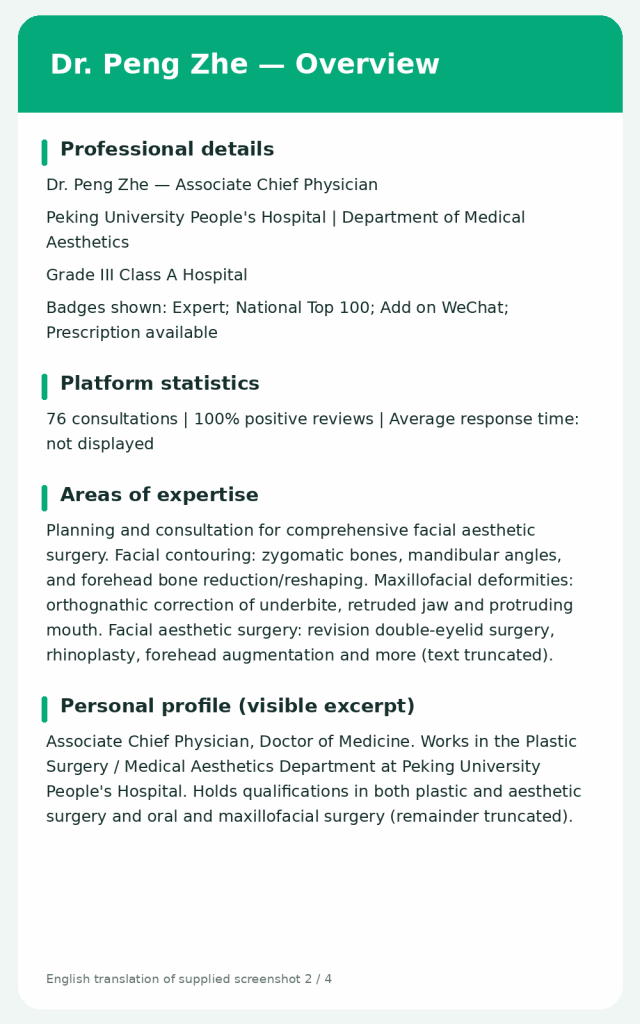
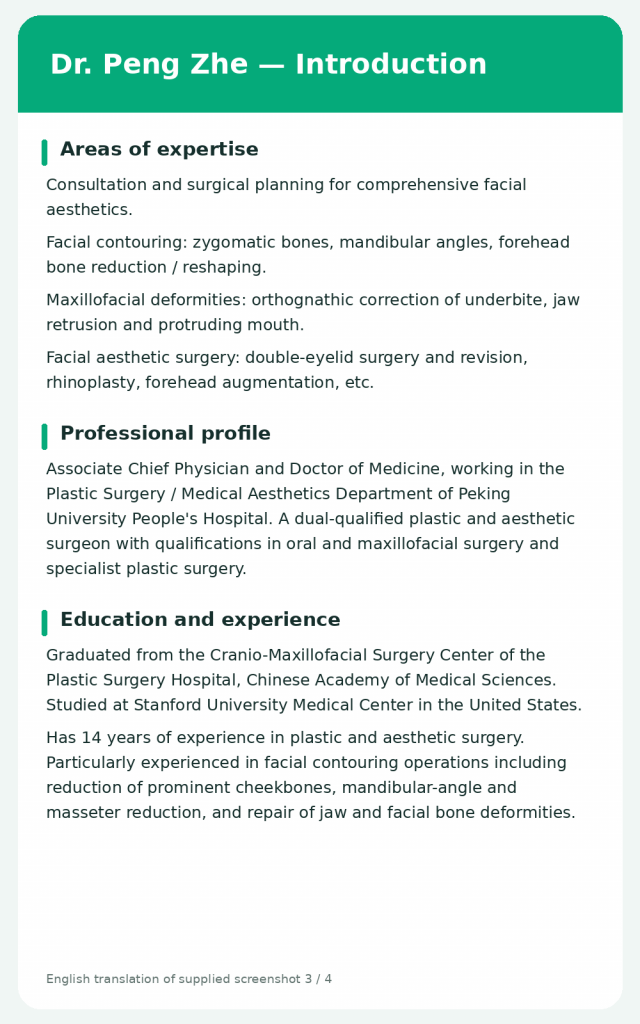
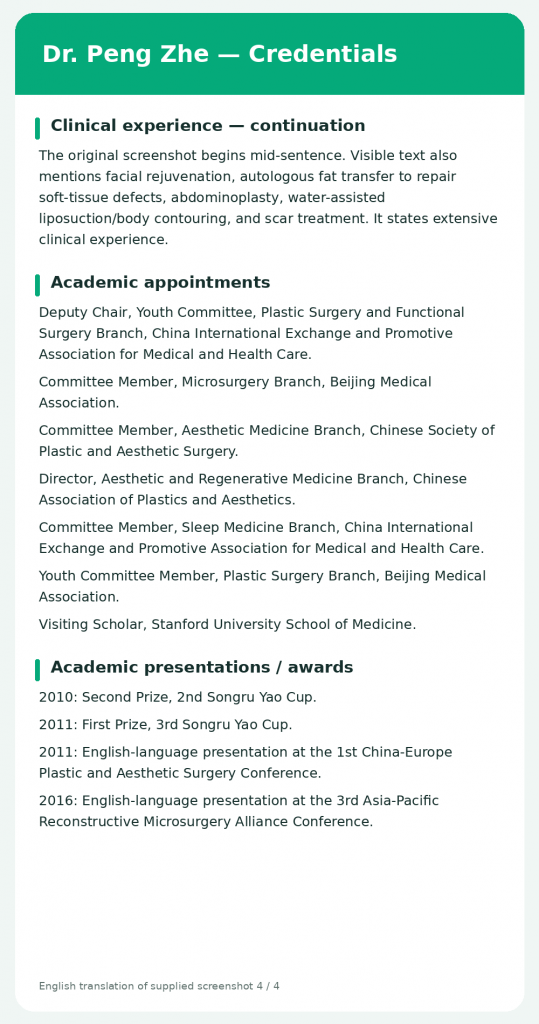
Chat record with the doctor
(split into parts because it’s long):
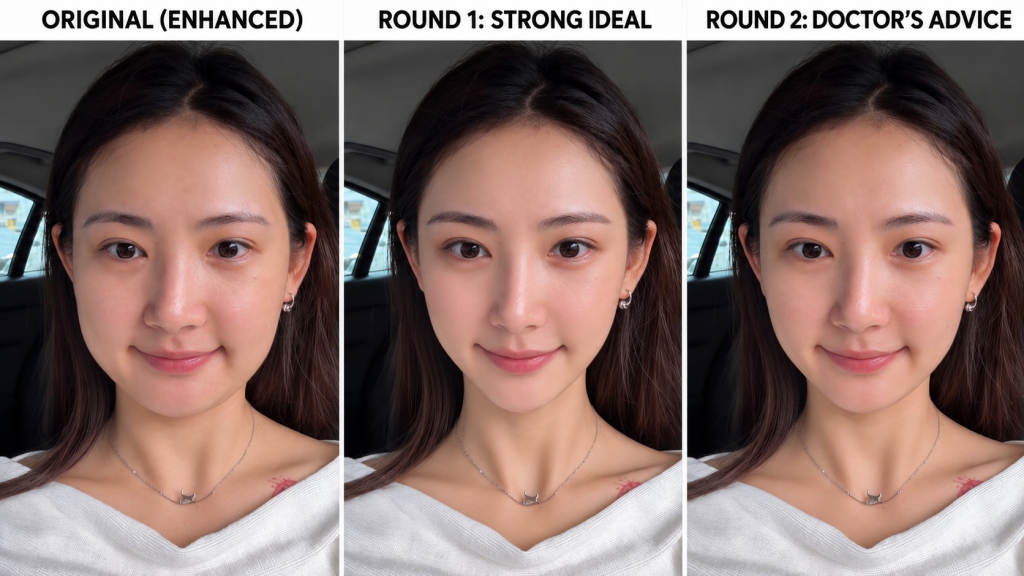
The third set of photos, simulated based on the doctor’s advice
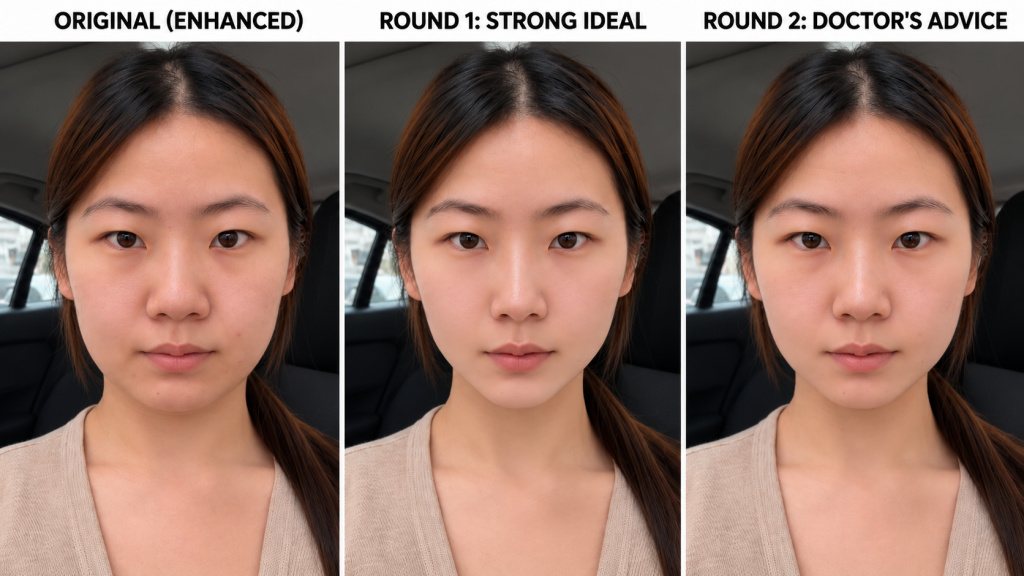
Participant 1: Nose
A smaller, straighter nose with a natural tip. The tip is not as sharp as in the AI image.
• Tip. Narrowing the tip too much can look “operated” and may age badly, so it is kept conservative.
• Recovery. Swelling can take many months to settle. Asymmetry is possible, and some people need a revision.
• Breathing. Changing the structure can narrow the airway. Breathing should be checked before anything else.
• Remember. This is a best-case picture, not a promise. There is no rush.
Participant 2: Jawline
A subtle narrowing only. His AI image went far beyond what injections can do.
• What helps. Masseter Botox only slims a jaw that is wide because of muscle. If it is mostly bone, it does very little.
• How long. It is temporary and needs repeating. Over time the muscle can shrink, chewing can feel weaker, and the lower cheek can look slightly hollow.
• Dose. Too much can look unnatural.
• Remember. It does not change how a person comes across in an interview.
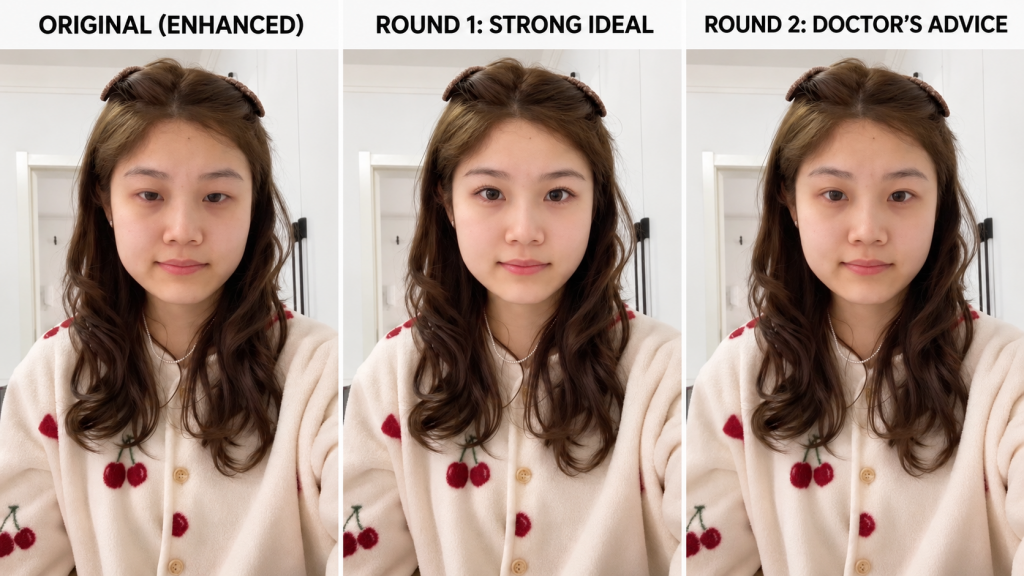
Participant 3: Double eyelids
A low, tapered fold. It looks rested, not changed.
• Method. A suture method suits thinner lids. An incision method suits thicker or heavier lids.
• Style. A lower, tapered fold usually looks more natural on East Asian eyes than a high, wide one.
• Risks. The fold can loosen or disappear, or come out uneven. There can be scarring and dry or irritated eyes. These are the most common reasons for revision.
• Check first. Eyelid muscle strength, because a weak muscle can give a droopy result. Meet two or three surgeons.
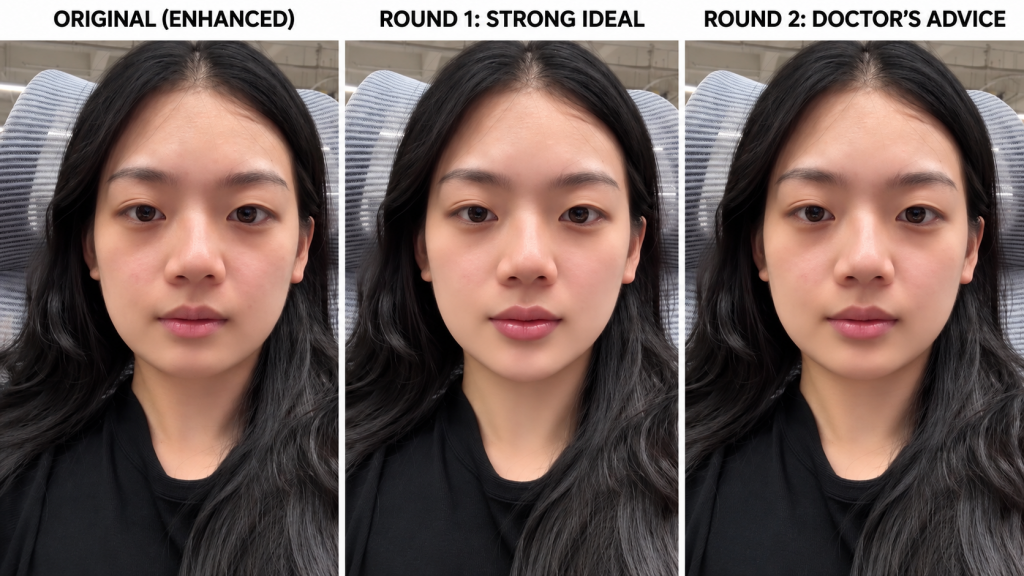
Participant 4: Lips and chin
A modest, proportionate version, shown next to the AI image.
• Balance. Chin projection can balance the profile without adding much to the lips. Many people end up needing less lip than they first ask for.
• Common effects. Swelling, bruising, lumps, filler that drifts, and an overfilled look, mostly when too much is used.
• Rare but serious. A blocked blood vessel, which is why the injector matters. Most hyaluronic acid fillers can be dissolved.
• Remember. If the wish comes from seeing similar faces online, wait a few months and look again.
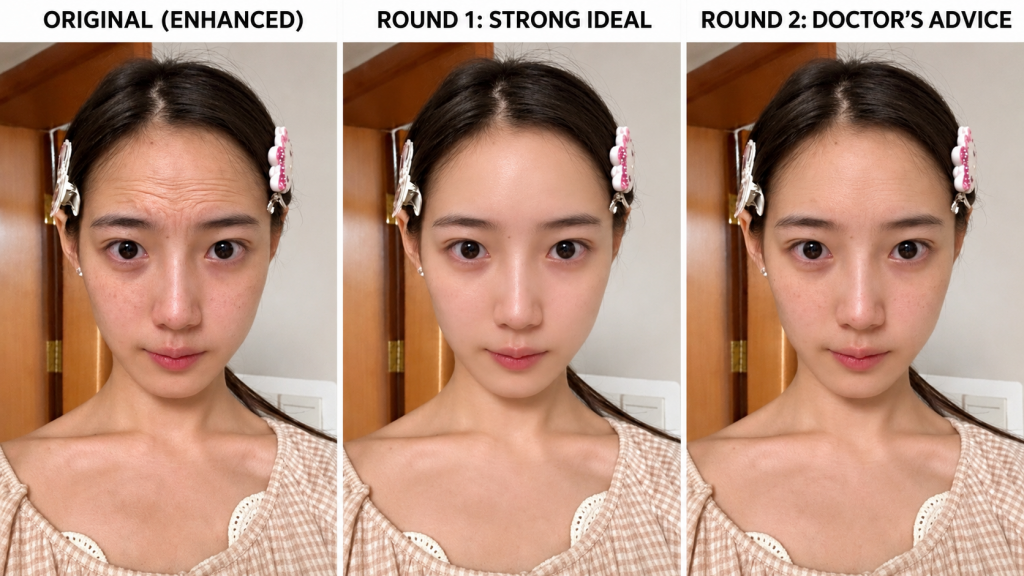
Participant 5: Forehead lines
Softer lines, with natural movement kept. Not frozen.
• What helps. Botox softens the lines by reducing movement in the forehead muscle. The aim is to soften, not freeze, so the dose is conservative.
• How long. It lasts a few months and then fades, so it is a recurring cost.
• Side effects. If too much is used, or it sits too low, the brows can feel heavy or the eyelids can drop slightly. It usually wears off but can last weeks. Bruising is common and minor.
• Limit. Lines at rest may need other treatments. Injections alone will not erase them.
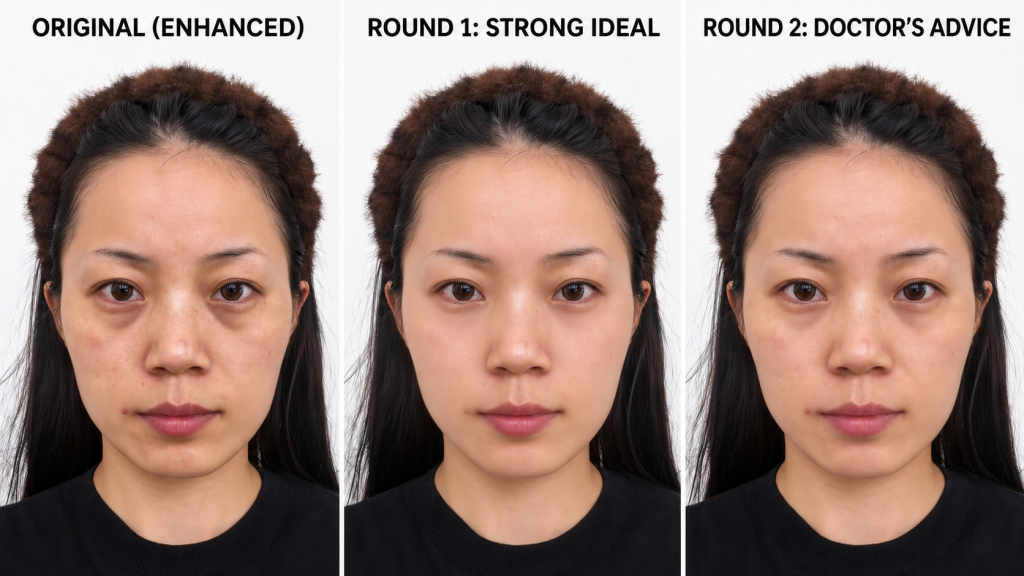
Participant 6: Tear troughs
A very small softening of the hollow. The dark colour is still visible.
• Cause first. Under-eye shadows can come from a hollow, from pigment, or from blood vessels showing through thin skin. Filler only helps the hollow.
• If it is pigment or vessels. Filler leaves the colour unchanged and can add puffiness.
• Risks. Swelling, lumps, a bluish tint and puffiness. Rarely, a blocked blood vessel can seriously damage the skin or vision, so this is a high-skill area.
• Remember. Check the pigment first. Sleep and skincare may matter more than filler.
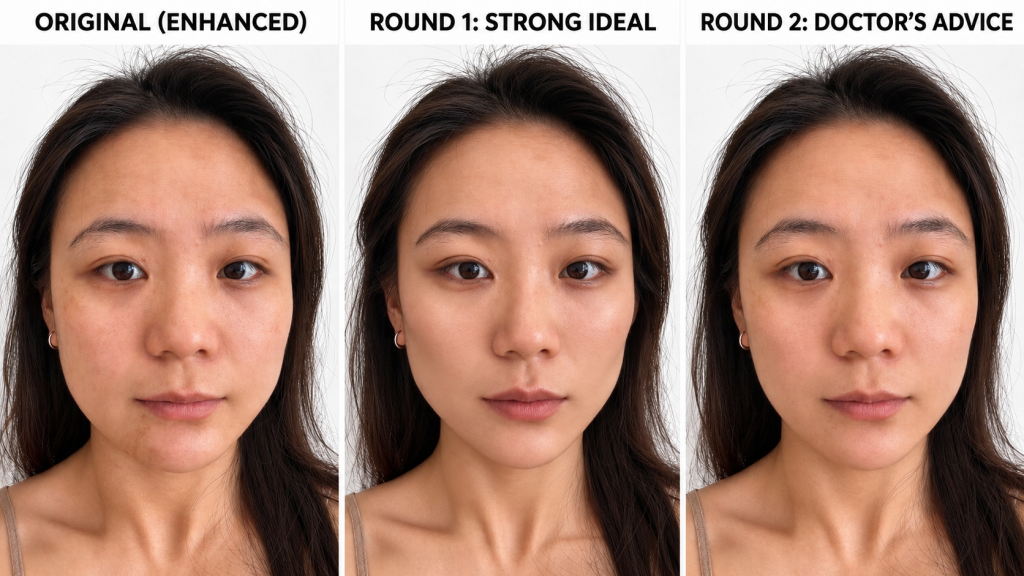
Participant 7: Cheekbones and jaw
A mild jaw change only. The cheekbones are left as they are.
• Surgery. Bone contouring is major surgery under general anaesthesia, and it cannot be undone. A CT scan comes first, to see the bone and where the nerves run.
• Risks. Nerve injury with lasting numbness, asymmetry, bleeding, infection, and swelling for weeks or months. Eating is limited at first.
• Soft tissue. Skin and fat may not shrink with the bone, so some people end up with sagging. Reducing cheekbones can flatten the middle of the face from the front.
• Remember. Check whether the width is bone or muscle. Get a second opinion and allow a waiting period.
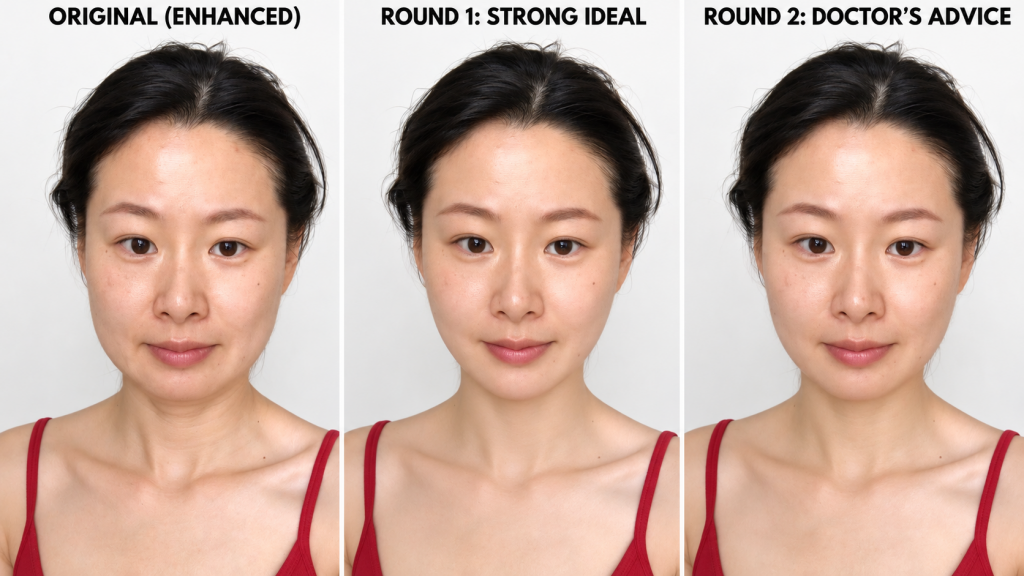
Participant 8: Lower face and neck lift
About five to eight years younger, not twenty. A gentle, natural lift.
• Non-surgical tightening. Ultrasound or radiofrequency gives a modest, gradual effect that is temporary.
• Thread lift. A little more immediate lift. Bruising, dimpling and asymmetry are possible, and the lift can relax sooner than hoped.
• Facelift. The biggest and longest result, but it means anaesthesia, scars hidden near the ear, weeks of recovery, and risks such as bruising, nerve injury and slow skin healing.
• Suggested start. A gentle tightening treatment and daily sun protection, reviewed at six months. A facelift is still possible later.